Mentalism
How to Be Great to Your Volunteers: A Guide for Magicians and Mentalists

The Art of the Audience Volunteer — Part Two
You know what’s in the envelope. You know where the routine is going. You’ve probably delivered that line about the wedding ring a hundred times.
The person standing beside you knows considerably less. Including, quite possibly, why they agreed to come up.
In part one, we looked at being an audience volunteer, including how to decline the invitation. This time, we’re looking at the person doing the inviting.
Because once someone joins you on stage, you’ve taken on a responsibility. They’re lending you their time, their trust and, for a few minutes, a fair amount of control over how the room sees them.
Look after that.
Make it an invitation they can actually decline
“Would you like to help?” is a perfectly good question, provided you’re prepared to accept the answer.
If someone says no, thank them and move on. No disappointed face. No “Oh, come on.” And certainly no recruiting the audience to chant until resistance becomes more embarrassing than participation.
They may have a reason. You don’t need to know it.
Watch the less obvious responses too: the person shrinking into their seat, shaking their head or smiling while clearly wishing you’d choose somebody else. A nervous smile isn’t necessarily a yes.
And if a whole table points at one person, check with that person. Their colleagues haven’t acquired booking rights over them.
Give them a decent arrival
Getting from a seat to the performing area can feel surprisingly exposed. People are watching. There may be steps, cables or a chair leg determined to have its own moment.
Give your volunteer time to get there. Show them the route and where you’d like them to stand. Offer help if it’s needed, and ask before taking an arm or guiding them by the shoulder.
Then greet them.
A proper hello, a name and a moment of ordinary human contact can settle things far more effectively than launching straight into your opening gag. If you ask their name, listen to it. Use it correctly.
They’ve only just arrived. Let them land.
Explain the small things
“Stand over there.”
Where?
The spot you’ve used throughout rehearsals is obvious to you. Your volunteer may be trying to work out whether you mean beside the table, behind it or somewhere near the fire exit.
Be specific and pleasant. “Just here, beside me, so everyone can see you” does the job.
The same applies to instructions involving cards, envelopes, writing and objects. Say what you need in manageable steps. If they’re supposed to keep something hidden, tell them before they turn it towards the front row.
It’s much easier than trying to retrieve a secret from forty people who have just read it.
And when an instruction goes astray, take a moment to consider whether you explained it clearly. “I should have made that clearer” will often serve you better than “No, I said your other hand.”
Let the audience see someone worth liking
You have a microphone, prepared material and the advantage of knowing what happens next. Your volunteer has none of those things.
That’s quite a head start.
There’s plenty of room for humour, including playful exchanges with someone who’s clearly enjoying themselves. But pay attention to where the laugh lands. Are they sharing it? Or waiting for you to finish so they can escape?
A joke about your own inability to organise three envelopes is usually a safer bet than a joke about their ability to count them.
Some volunteers are wonderfully quick. Enjoy that. Give them the laugh they’ve earned, rather than reaching for a line that puts them back in their place.
You’re allowed to be the second funniest person on stage for a moment. The act will survive.
Don’t confuse cooperation with comfort
Most people are polite.
They’ll laugh when they’re unsure, agree when they haven’t quite heard and put up with something awkward because they don’t want to disrupt the show.
That makes it easy to miss discomfort if you’re busy watching for the next cue.
Look at the person beside you. Have they become unusually quiet? Are they pulling away, hesitating or looking towards their seat? A brief, quiet check can give them room to tell you what they need.
And make the options real.
You might continue with them seated, change the request or thank them and find someone else. If they ask to stop, help them do so gracefully. They shouldn’t have to negotiate their release from a card trick.
Be careful what you ask people to reveal
Mentalism can give apparently simple questions a considerable amount of weight.
“Think of someone important to you.”
You may be expecting a name and a neat revelation. They may be thinking of someone who died last month.
You can’t anticipate every association. You can, however, give people a comfortable starting point and permission to change their minds. Asking for a happy memory they’d be willing to discuss publicly gives them more guidance than “Think of the most emotional moment of your life.”
Be clear about what may be revealed. Writing something down can feel private even when the eventual plan is to announce it to the room.
Take particular care with routines involving relationships, money, health or personal history. The fact that a method allows you to reveal something doesn’t settle whether you should.
If an answer takes you somewhere sensitive, resist the temptation to make the most of it. The routine can wait.
Physical contact shouldn’t be a surprise
If you need someone to hold out a hand, close their eyes or allow you to touch their shoulder, explain what you’re asking.
Then ask.
Do the same before borrowing jewellery, inspecting clothing or reaching towards a pocket. Something may be entirely innocent within the mechanics of your routine and still feel intrusive to the person experiencing it.
Think through the practical details in advance. Can this be done with less contact? Can they remove the ring themselves? Is there an alternative if they’d rather keep their eyes open?
A well-prepared alternative saves everyone from that strained little pause when “Are you comfortable with this?” turns out to have only one acceptable answer.
Give them something they can do well
Your volunteer shouldn’t need specialist handling skills or the memory of a competition finalist to get through the routine.
If a task is difficult, simplify it. If it needs demonstration, demonstrate it. And if hearing, sight, mobility or language makes an instruction awkward, adapt without turning the adjustment into an announcement.
They don’t owe the audience an explanation.
This matters in close-up work too. Someone seated at a dinner table may have very little room to handle cards, somewhere inconvenient to put a drink and three people talking behind them. Conditions which seem perfectly reasonable from your side of the table may be rather less helpful from theirs.
Give them time. Silence while someone follows an instruction can feel much longer to the performer than it does to everyone else.
You don’t always need to fill it.
When something goes wrong, share the load
A card gets shown too soon. A number is forgotten. Someone misunderstands which envelope to open.
It happens.
Your response tells the audience how to treat the person involved. If you sound irritated, the room may become uncomfortable. If you stay calm and help them through it, most people will happily come with you.
Sometimes a light line is enough. Sometimes you need a different route through the effect. Occasionally, you need to abandon it.
None of those options requires making your volunteer look foolish.
It’s worth rehearsing the awkward versions of a routine as well as the successful one. What will you say if they don’t remember? What if they disagree with your revelation? What if they want to sit down halfway through?
An alternative you’ve considered beforehand is much easier to deliver kindly.
Finish their part properly
You’ve reached the revelation. The audience reacts. You’re already thinking about the next effect.
Your volunteer is still standing there.
Thank them by name. Give them credit for helping and invite the audience to applaud. Make it clear that they can return to their seat, and help with the route if necessary.
Check that borrowed belongings have gone back to their owners. A missing watch has a way of distracting people from your carefully constructed finale.
If they’ve been holding something, take it from them before they start navigating the steps. And let the applause belong to them for a moment.
They’ve earned it.
What will they say at the interval?
We spend a lot of time thinking about what an audience will remember: the signed card, the impossible prediction, the borrowed object appearing somewhere ridiculous.
It’s worth thinking about what your volunteer will say afterwards, too.
Will they be delighted that they took part? Will they be showing someone a souvenir, describing the moment or laughing about their own reaction?
Or will they be explaining that they didn’t really want to go up, but felt they couldn’t refuse?
You can’t guarantee that everyone will enjoy being on stage. You can give them clear choices, treat them with warmth and notice when something needs to change.
Then they have a much better chance of enjoying the impossible thing you’ve worked so hard to show them.
And you have a much better chance of being remembered fondly by the person who saw it closest.
Bring the conversation to The Magi
Before your next performance, run through one routine from your volunteer’s point of view. Look at what you ask them to do, what they know at each stage and where they might feel uncertain. You may find a small change that makes the whole routine better.
Conversations like these are a good reason to spend time with other magicians. If you’d like to share ideas, develop your performing and meet others who care about the craft, find out about joining The Order of The Magi, Manchester’s oldest magic society.
Bring your experience. Bring your questions.
We’ve all given an instruction that made perfect sense until somebody tried to follow it.
How to Be a Great Audience Volunteer at a Magic Show

The Art of the Audience Volunteer — Part One
The magician looks out across the room.
“I need someone to help me with this.”
Suddenly, half the audience has developed a fascination with their shoes. Someone points enthusiastically at their partner. And somewhere near the front, a person who was having a perfectly relaxed evening wonders whether it is too late to hide behind the wine list.
Being an audience volunteer at a magic show can be a wonderful experience. You get the best view, become part of something impossible and leave with a story to tell.
You also don’t need to be funny, outgoing or good at shuffling cards.
Whether you’re keen to take part or would much rather stay in your seat, here’s how to enjoy the moment.
First things first: you’re allowed to say no
An invitation to help is exactly that: an invitation.
If you don’t want to go on stage, a smile and a clear “No, thank you” are enough. You don’t need an excuse, a medical history or evidence of an urgent appointment elsewhere.
If you’re happy to help from your seat, you can say so:
“I’d rather stay here, but I’m happy to choose a card.”
And if you don’t want to participate at all, that’s fine too. Buying a ticket doesn’t oblige you to become part of the performance.
The same courtesy applies to your companions. Before enthusiastically nominating your friend, partner or colleague, remember that enjoying someone’s company isn’t quite the same as having permission to send them on stage.
You don’t need to know how anything works
There is no revision required.
You don’t need to understand magic, recognise a particular playing card or know what a mentalist is about to ask. The performer should explain what they need as you go along.
Usually, your role is straightforward: make a choice, hold an object, remember something or describe what you’ve seen.
Listen, take your time and ask if anything is unclear. “Would you like me to show everyone?” is a perfectly sensible question. So is “Sorry, which hand?”
It’s a magic show. Nobody should be marking your work.
Be yourself — including when you’re surprised
You don’t have to produce a television reaction.
If something astonishes you, let it. If your response is a quiet smile and a baffled shake of the head, that’s equally welcome. There is no obligation to leap backwards, shout or inspect the furniture.
You also don’t need to agree with something that isn’t true. If you’re asked whether that was your card, your word or your freely chosen number, answer honestly.
A genuine response gives the moment its meaning. You’re there as yourself, rather than as an actor who has somehow missed the rehearsal.
Let the performer finish the question
A little nervousness can make us rush. So can the sudden discovery that several dozen people are watching us hold an envelope.
Give yourself a moment.
Listen to the whole instruction before acting, especially if you’re being asked to remember something privately or show an object to the audience. If you miss a detail, ask for it again.
There’s no prize for being the fastest person ever to write down a three-digit number.
Enjoy the joke without feeling obliged to supply one
A spontaneous comment can be one of the best moments in a live show. You don’t have to suppress your personality or become solemn because someone has handed you a pack of cards.
But you don’t need to turn every question into a comedy audition either.
Answering a simple question simply helps the performance move along. If a funny moment happens naturally, enjoy it. The magician can take care of keeping the room entertained.
Your job description does not include “rescue the evening with banter”.
Curiosity is welcome; grabbing the props is less helpful
Of course you want to look. Something peculiar has just happened six inches from your nose.
Handle anything you’ve been invited to handle, and feel free to ask before touching something else. There may be fragile objects, equipment or items belonging to another audience member.
Trying to snatch something away or rummage through the performer’s pockets tends to make the evening awkward surprisingly quickly.
You can be curious without turning the show into a search warrant.
At a mentalism show, keep your boundaries
A mentalist may ask you to think of a person, remember an experience or write something down.
Choose something you’re comfortable bringing into a public performance. There’s no need to reach for your most private memory simply because someone has asked you to think of something meaningful.
If you’re unsure whether an answer will be spoken aloud, ask before sharing it.
You can also say:
“I’d rather choose something else.”
Or:
“I’d prefer not to share that.”
You don’t have to disclose sensitive information to be a good volunteer. The performer should work with your boundaries.
Tell the performer what would help you
If you haven’t heard an instruction, can’t clearly see an object or would find the steps difficult, say so.
You might be perfectly happy to participate from your seat. You might need the magician to stand on your other side, repeat a question or give you a little longer.
You don’t owe the room an explanation of your circumstances. A simple “Could I stay seated?” or “Could you repeat that?” tells the performer what they need to know.
Being a good volunteer doesn’t mean putting up with discomfort.
Changed your mind? You can still stop
Sometimes an invitation sounds enjoyable from your seat and feels rather different once you’re standing in front of everyone.
You’re allowed to change your mind.
“I’d like to sit down now, please” is clear and perfectly reasonable. You can say it quietly to the performer if that feels easier.
And if a joke or request makes you uncomfortable, you don’t have to laugh along to keep the show moving. Making the experience work is the performer’s responsibility too.
If you’re staying in the audience, you still have a part to play
Give volunteers the kind of welcome you would appreciate yourself.
Applaud them as they come up. Let them answer for themselves. Resist shouting instructions, supplying their punchlines or announcing that they’re “always like this”.
Someone who looks confident may be feeling nervous. A warm audience can make an enormous difference.
And when they return to their seat, let them enjoy their moment. They’ve just helped create something the whole room shared.
The secret to being a great volunteer
You don’t need a big personality, a clever line or nerves of steel.
Be yourself, listen, answer honestly and say what you’re comfortable with. That’s plenty.
A good magical moment comes from the relationship between the performer, the volunteer and the audience. When everyone feels at ease, there’s room for surprise, laughter and that lovely pause when nobody is quite sure what just happened.
Even the person who was studying the wine list.
Keep the magic going
Know someone who loves a magic show but dreads being picked? Share this article with them before your next night out.
And if you’re curious about the people on the other side of the trick, discover The Order of The Magi, Manchester’s oldest magic society. Explore our programme of magic lectures and club events, or find out about becoming a member.
Next in this two-part series: How to Be Great to Your Volunteers — how magicians and mentalists can help the people who join them on stage feel welcome, confident and appreciated.
The Joe Abrahams Stage Competition Trophy
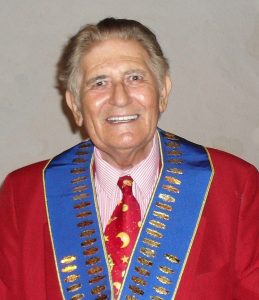
The late and much respected Past President Joe Abrahams
Thanks to all of you who were able to attend last night’s Magic Auction. Whether you were buyers, sellers or runners your participation was greatly appreciated. We received a good figure from the sale of Joe Abraham’s estate which will enable us to purchase a new trophy for the stage competition – “The Joe Abrahams Trophy” to be held later this year. Will you be the first to receive it? You’ve got to be in to win.
Joe was a very active member of the society, Treasurer and Past President, and it seems only fitting that the funds raised from the sale of his magical estate, kindly donated by his family, are used to purchase a new trophy, to remember him by.
We hope to see you all at Geoff Newton’s ‘Key Ring’ lecture on Tuesday 23rd May.
Finally if you are a society member and have not yet let Mike have your mobile number please do so in order that we can send text alerts to announce meetings, new etc.
John Archer Lecture – Manchester, April 2017
The Helen Moran Memorial Lecture this year took place on 25th April and was presented by John Archer. There was a good turn- out of members and visitors and included Peter Moran.
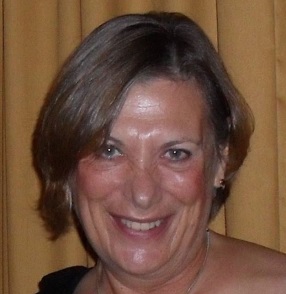
Helen Moran was a much respected honorary member of The Order of The Magi, who worked very hard behind the scenes. When Helen sadly passed away, she kindly left a bequest to provide the first magic lecture of the Society’s year.
I last saw John at South Tyneside a few weeks ago as a performer and it was great to see a lecture where he showed not only how his effects were achieved but how to and where to obtain the laughs. By the use of various methods he illustrated how a magician screws up can be turned into a positive result with hilarious consequences.
He went on to show the envelope routine that fooled Penn and Teller and brought him a trip to Las Vegas. It was indeed clever thinking and one can understand why they were fooled!
His coincidence routine with a very attention grabbing story was simplicity in modus operandi, but needed presentation work to achieve the right angle. Apart from two decks of cards all it needed was some ******** (you should have been there) and you were off.
His dog pet name was a much improved and simplified working of an effect he has demonstrated at a previous lecture and now a lot stronger.
A mind reading routine of a chosen celebrity went down well.
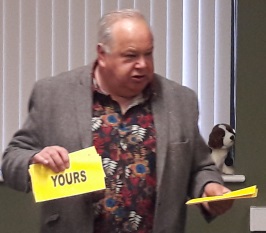 A routine with ESP cards was another hit. All routines were described in great detail with all the pauses and asides clearly shown. Yes, I can understand why this man fooled Penn and Teller!
On your behalf I would like to thank Peter for continuing the sponsorship to keep in our minds all the hard work and massive input Helen Moran put into this society.
Report by Geoff Newton
(Webmaster Note: Parts of this report, which features in full in the members’ only Magi Magazine, have been edited to keep John’s methods secret. For full explanations, we recommend that you speak to John Archer directly, who will be able to advise which of his lecture note packs contain the relevant tricks)